



Conversations are
the Work.

Conversations are teams’ most underutilized resource

Our Vision in Action

We awaken the world to the power and joy of authentic human connection, setting a new standard for leadership that produces meaningful, enduring impact.

30 +

Years of
meaningful change

Decades of experience building human connections with successful outcomes for global Fortune100, mid-size and emerging companies.

100 +

Countries served

Multi-lingual and diverse backgrounds ranging from management consulting, design thinking and organizational psychology to systems engineering, criminal justice and hostage negotiation.

450 +

Orgs supported
in multiple industries

A range of tools, methods and practices based on how humans interact and what they need to continually evolve.

Who We Are

Who We Are, We make a difference, together.

We make a difference, together.

It’s never been more important to keep up with AI, rapid innovation, economic variables and societal changes. This means your leadership must continually grow and develop, ensuring your strategy and culture produce the results you strive for. We understand every organization has unique strengths and challenges, so we work closely with you to develop leaders you need.

Why Conversant?

We are a leadership development firm with a collaborative approach to developing leaders and optimizing team performance and cross-team collaboration. There’s no ‘one size fits all’ when it comes to leadership and strategy, so together we customize the best solutions for maximum impact.

We know leadership development is a journey that never ends, so we make it our mission to develop current and future leaders who make every conversation an occasion to lead, with impactful and meaningful results.

SOLUTIONS

Designed For
You, With You.

Leadership Development & Coaching

Leadership Development & Coaching

Development and coaching for leaders at every level. More than typical leadership training, our approach incorporates your organizational values and builds unique, experiential solutions that grow untapped talent.

Our solutions can be fully customized to meet your needs, or you can join leaders from other organizations in on-going programs we offer throughout the year for a program series on leadership for new managers, cross functional leaders, or our flagship program for executives responsible for leading culture and setting strategy.

Working with you every step of the way

Team Performance

Team Performance

Custom solutions designed to uplevel team performance, for individuals and as a group, and refine cross-functional team collaboration. Using proven methods in conversational diagnostics and alignment practices, we track what’s crucial to overcome challenges and gain organizational success.

Helping your teams work smarter together

Strategy Implementation

Strategy Implementation

Taking a human-centric approach to strategy implementation and engagement, we create a clear and meaningful journey your employees want to be a part of. Our methods result in accomplishing your objectives and goals with higher engagement and less resistance, on time and budget.

Creating a path to success

Change Leadership

Change Leadership

Programmatic methods to guide you through change management and change leadership. Working closely with you, we define strategy, build system maps and collectively move towards a common purpose, with full enablement and training so your team can own future change.

Using proven methods to implement change

Multi-Group-two

Multi-Group Collaboration

Custom solutions designed to help you navigate, and thrive in complex negotiations and collaborations with industry, government and other outside organizations. Our methods include proven cooperative negotiation, system mapping and large group process design tools to support internal and external partnerships.

Synchronizing internal and external teams

Success Stories

Healthcare picture. Two women talking

PHS: Rebuilding Trust with The Promise

Their Challenge
Presbyterian Healthcare Services (PHS) had been working to improve the patient and member experience for many years with variable success; it was faced with renewed urgency to improve the customer experience in order to achieve their mission-critical goals with visible end results.

The Impact
PHS has seen progress in its mission-critical goal of improving the patient and member experience in the hospitals and health plan. The nature of conversations within the organization has changed. Leaders are focused on facts, finding intersections in difficult conversations, and asking, “what is it time for now?” Awareness of presence, learning to listen and the impact of leader behaviors on the environment are forefront.

DFA cow image

Dairy Farmers of America

Their Challenge
The milk marketing cooperative Dairy Farmers of America faces a rapidly evolving dairy industry, with competitive and environmental pressure requiring leaders that could take DFA into the future. They recognized the need to prepare the next generation of leaders who respect DFA’s past, are deeply committed to DFA’s values AND can lead the organization through the complexity and various challenges.

The Impact
The first three years of the Make Your Mark programs gave rave reviews of their experience. These included marks of 4.8 for the mid-level leader program and 4.7 on a 5.0 scale for the senior-leader program regarding the overall experience value. They also expressed that their participation in the program will add value to the organization, through scores of 4.8 and 4.7 respectively.

Lacoste: A Brand Evolution Story

Secureworks

Their Challenge
Secureworks is a cybersecurity firm specializing in threat intelligence detection and response. The company offers advance threat and critical asset protection, compliance and cybersecurity risk management, and security operations services.

The Impact
The Secureworks executive team, according to the CEO, is more aligned to strategic priorities than any time in their history.

Tools for Real Change

Guides and insights for learning
Conversant On Connection Episode 83: What is a Connected Leader?
The Future of Middle management On Connection Episode

It seems most everywhere I go, with most every client I spend time with, what I hear over and over again is how ‘overwhelmed’ everyone is.  Too much work, too many meetings, too many emails, too much chaos. Employees at all levels are crying out for ‘prioritization,’ seeing that as the solution to the feeling overloaded. This is true even at the executive level, though theoretically, they have the power in the system to do the actual prioritization and, I believe in most cases, the skills to do so. So, what’s stopping organizations from setting clear priorities right now? I have one theory… 

I’m a casual, sometimes gardener.  In the early days of the pandemic, I planted a small butterfly garden.  It’s been something that gets me outside and gives us something pretty to look at in the back corner of our yard.  At the end of each season, many of the plants need a good pruning to ensure they grow back strong the following year.  I am HORRIBLE at this part. Just horrible. I don’t have much of a green thumb to start with, so putting in the effort and watching these tender little plants to grow has felt like a major success. And now I’m supposed to cut them back?!?  Cut back healthy, beautiful plants? Given my attachment to them, I’m tentative and rarely trim them sufficiently.    

It’s a similar challenge to the one many organizations face in setting clear priorities. The hard part isn’t setting the priorities—it’s what we have to say no to in order for those priorities to make a real difference in the value and experience of our work. If you have a list of 50 priorities, those are NOT priorities. A priority by definition is “the fact or condition of being regarded or treated as more important.”  Having 50 projects that are “more” important means it’s very unclear how to make real tradeoffs when time, money, or talent becomes constrained.  

Being able to say that a project, initiative, or focus area is MORE important than others is really, really challenging.  It gets even more challenging when we shift priorities—meaning something we chose to dedicate time, money and talent to is no longer going to get those resources. 

Setting clear strategic priorities means we need to have deep alignment about where we’re heading, and what we’re trying to accomplish. Then we need clarity and alignment around how we envision getting there.  We also need to be realistic about the inevitability of changes in circumstances, things that require us to make adjustments as conditions change.  (If you have been around us at all, this should sound incredibly familiar: Align-Act-Adjust) 

I often get asked if there’s a prioritization framework we recommend. Yes, of course, those are helpful, and there is a plethora of them available. However, I don’t think it’s the framework that most organizations are lacking, or the skills needed to put one to use. We just have a hard time pruning. I get it! Those “pruning” conversations are not easy and can be incredibly challenging. If at the core of prioritization is declaring what’s more important, there are going to be people who are impacted by that decision, for better or for worse. People who have been working really hard on something, possibly putting in 10’s or 100’s of hours, not to mention the personal energy and care, to make that project a success. Or maybe they’ve built a business line or a new product and now there needs to be a conversation about why that this is no longer the thing that’s “more” important. Maybe someone has a fantastic new idea, but to fulfill it would mean moving resources away from other strategic needs.   

We say it over and over: The conversations are the work. Setting clear priorities means also being clear about why something else is no longer going to get the same support. That could be explaining how stopping one project will free up valuable resources (including people’s time!) for something that is critically important to the organization’s collective future. It could also be having a conversation about why the shift matters to employees, customers, and other stakeholders. And by the way, if it’s my idea or project that’s getting cut, I might be disappointed or frustrated. That’s just the experience of being human. Give those people some time to digest the decision and your explanation, and some space to think it through. Being well aligned with the organization’s direction does not mean I have to like every decision. I don’t have to personally like a decision in order to acknowledge and respect why it’s smart and necessary in the context of our shared goals.  

We’re coming up on the time of year for budget-setting conversations, which is a great opportunity to think about prioritization and what that will mean realistically when it comes to the allocation of finite resources like time, money, and talent. Spend time with your teams getting clear about what is most important to focus on given your goals. It’s tempting and exciting to share new ideas and talk about all the possible ways you could grow and improve in the year ahead, but it’s just as important (if not more so) that those conversations are followed up with getting clear on what activities or projects are going to get material support, and which ones won’t. Then you have to make sure those less important projects really do stop happening (or, said another way, stop taking up valuable resources that could be directed towards the more important things).   

Setting clear priorities isn’t just a best practice, it’s a gift that leaders can bring to their teams. Getting really good at this may not relieve all of the overwhelm you’re experiencing today, but it is an absolutely necessary step in getting there. It will allow your teams to focus their energy more fully on the things you know will impact your most important goals most efficiently. Spreading resources too thin across a long list of projects waters down impact. Instead, tend to a smaller number of important things, and celebrate the growth and success that focus affords. You’ll have more energy (and more resources to reinvest) down the road.  
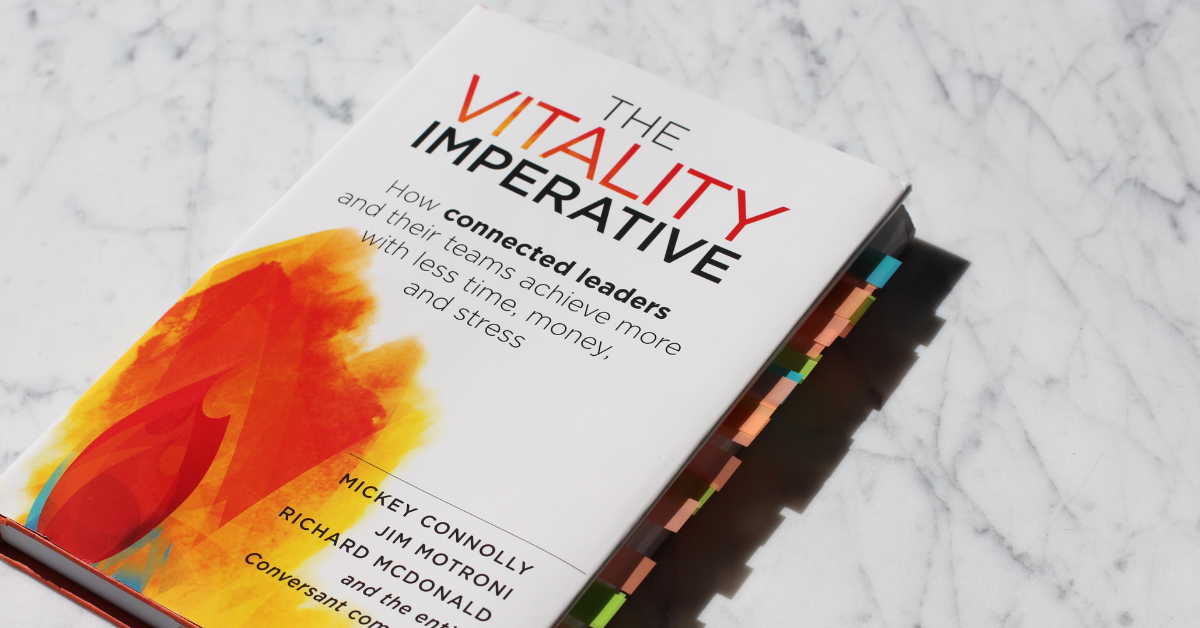
picture of book
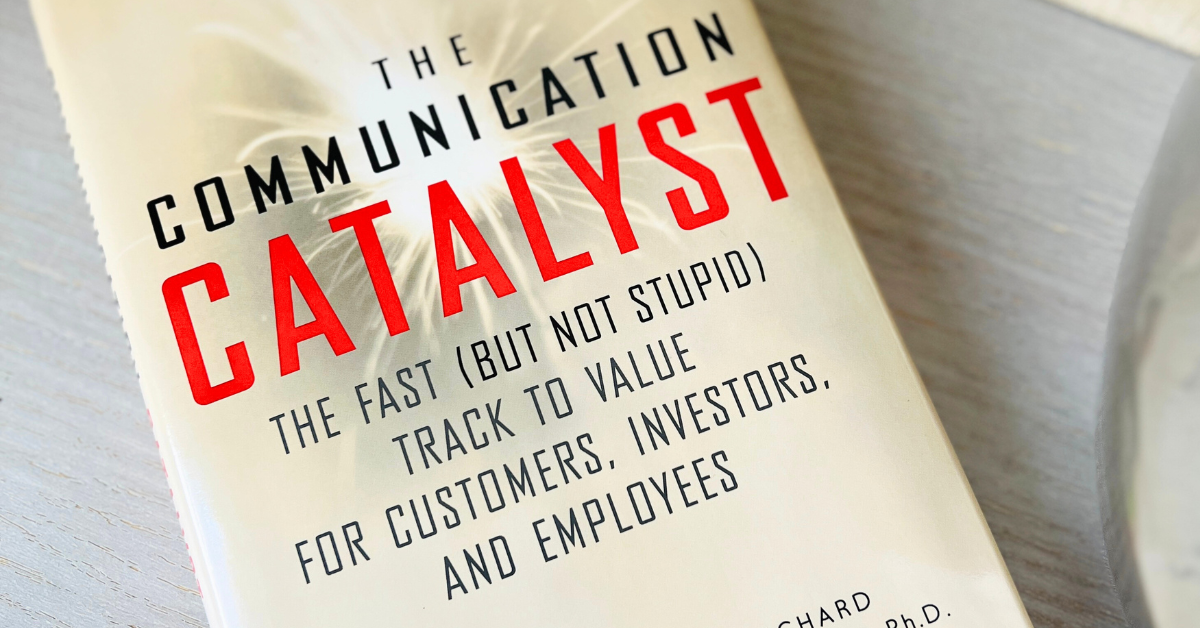
The Communication Catalyst book
Port Reorg & Team Coaching
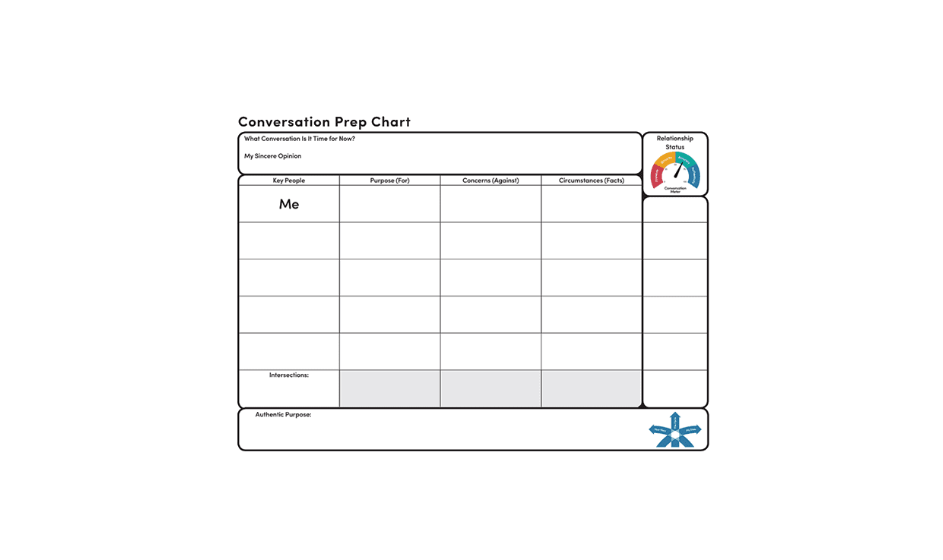
Conversation prep chart

Conversations are the Work

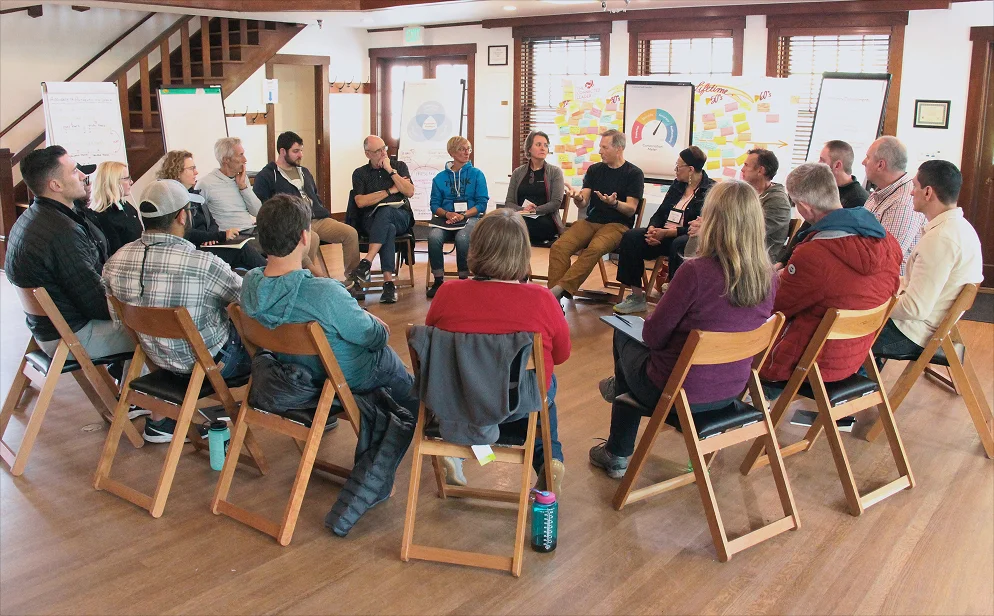
We help you navigate challenges and offer new perspectives.

Working with
leaders at every level
Conversations are the Work